
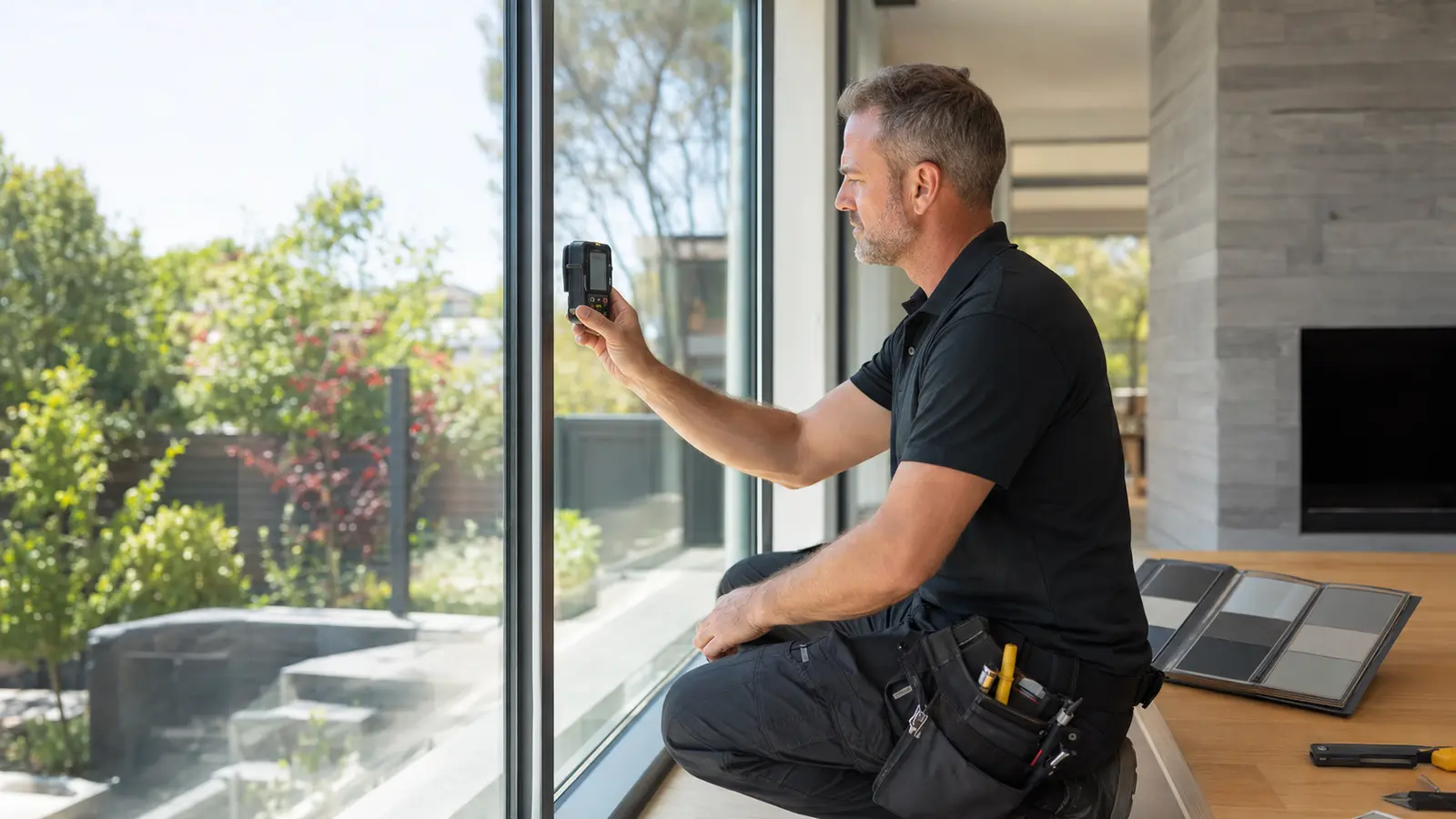
This information explains the main considerations. A product should be approved for the specific glass and glazing system using the film manufacturer's current compatibility guidance.
Why the glass matters
Window film is not selected by appearance alone. A professional installer first asks whether the window is single glazed, secondary glazed or a sealed insulated glass unit. The installer may also need to identify annealed, laminated, heat-strengthened, toughened, wired, patterned or coated glass.
Those details influence solar performance, thermal-stress risk, insulated-glass seals, product warranty and whether the film should be installed internally or externally.
What happens to solar energy?
When sunlight reaches a window, part of its energy is transmitted, part is reflected and part is absorbed. Applied film changes that balance.
Some films reject a large portion of energy through reflection. Others absorb more energy within the film-and-glass system. Ceramic describes technology within a film; it does not by itself tell an installer how much energy the completed glazing system will absorb.
Absorbed energy raises the glass temperature. The greater concern is usually not temperature alone, but an excessive temperature difference across the same pane.
The A-to-B temperature difference
Imagine point A is the hottest part near the centre of a sunlit pane and point B is the coldest area retained inside the frame or shaded by the building.
The hotter area tries to expand while the colder edge resists. This places tensile stress at the glass edge. If that stress exceeds the strength available at the edge, a crack may begin there and travel into the pane.
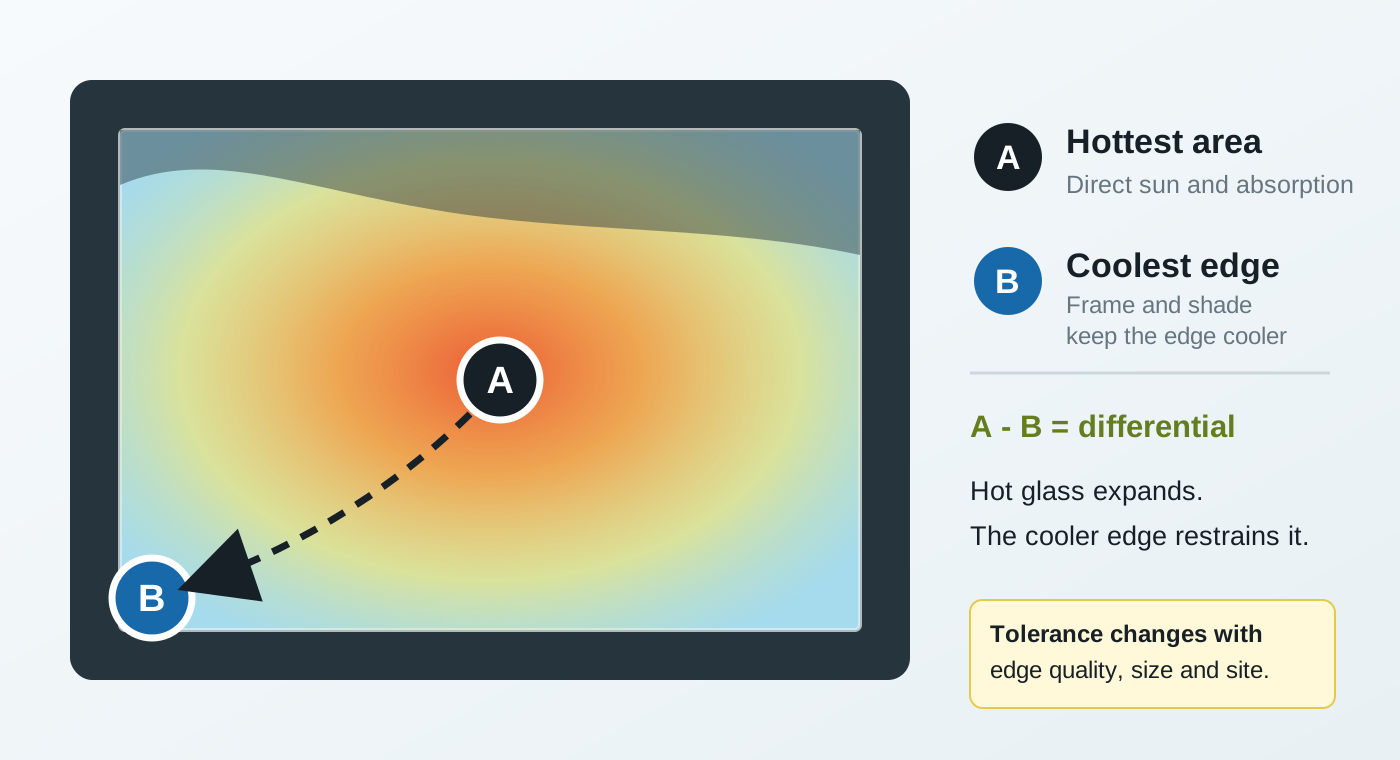
Poor or damaged edges can significantly reduce the stress a pane can tolerate. Larger panes also provide more area across which strong temperature differences can develop. Pane dimensions, edge quality and site conditions belong in the assessment—not just the glass name.
Indicative temperature-difference guide
The long-standing Glass Tinting Supplies buyer guide uses the following simple figures to demonstrate why glass types cannot be treated alike.
| Glass description | Indicative A-to-B difference |
|---|---|
| Wired glass | Approximately 25°C |
| Rough-cast or patterned glass | Approximately 30°C |
| Annealed float glass | Approximately 40°C |
| Fully toughened glass | Approximately 250°C |
These are practical guide figures, not guaranteed break points. Edge finish, chips hidden by the frame, glass thickness, dimensions, holes, coatings, laminates, framing, shading and glazing construction can all change the result.
Engineering guidance relates the temperature differential to the stress it creates and then compares that stress with the available strength of the actual glass edge. This is why one published number can never replace an inspection.
Single, secondary and insulated glazing
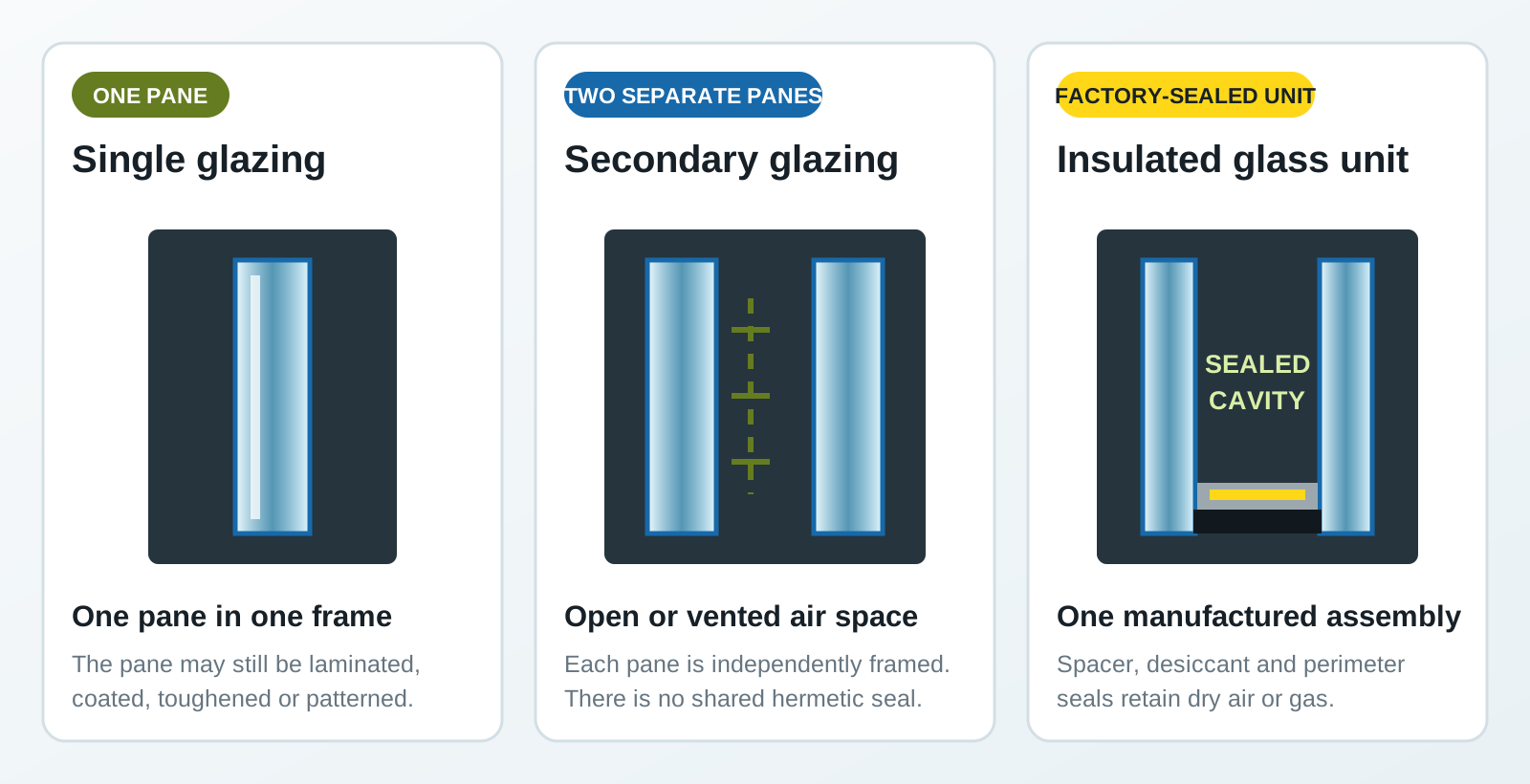
Single glazing
Single glazing contains one pane between the interior and exterior environments. That pane may still be annealed, laminated, toughened, patterned, wired, body-tinted or coated. “Single glazed” describes the number of panes—not the strength or film compatibility.
Two separate panes or unsealed secondary glazing
Some windows have two independently framed panes with an air space that remains open or vented to the surrounding environment. This may be called secondary glazing, add-on double glazing or an unsealed double-window system.
It is not the same as a factory-sealed insulated glass unit. There is no shared hermetic perimeter seal to fail, but heat can still accumulate between the panes. Each pane, coating, frame and shading condition must be assessed independently.
Sealed insulated glass units (IGUs)
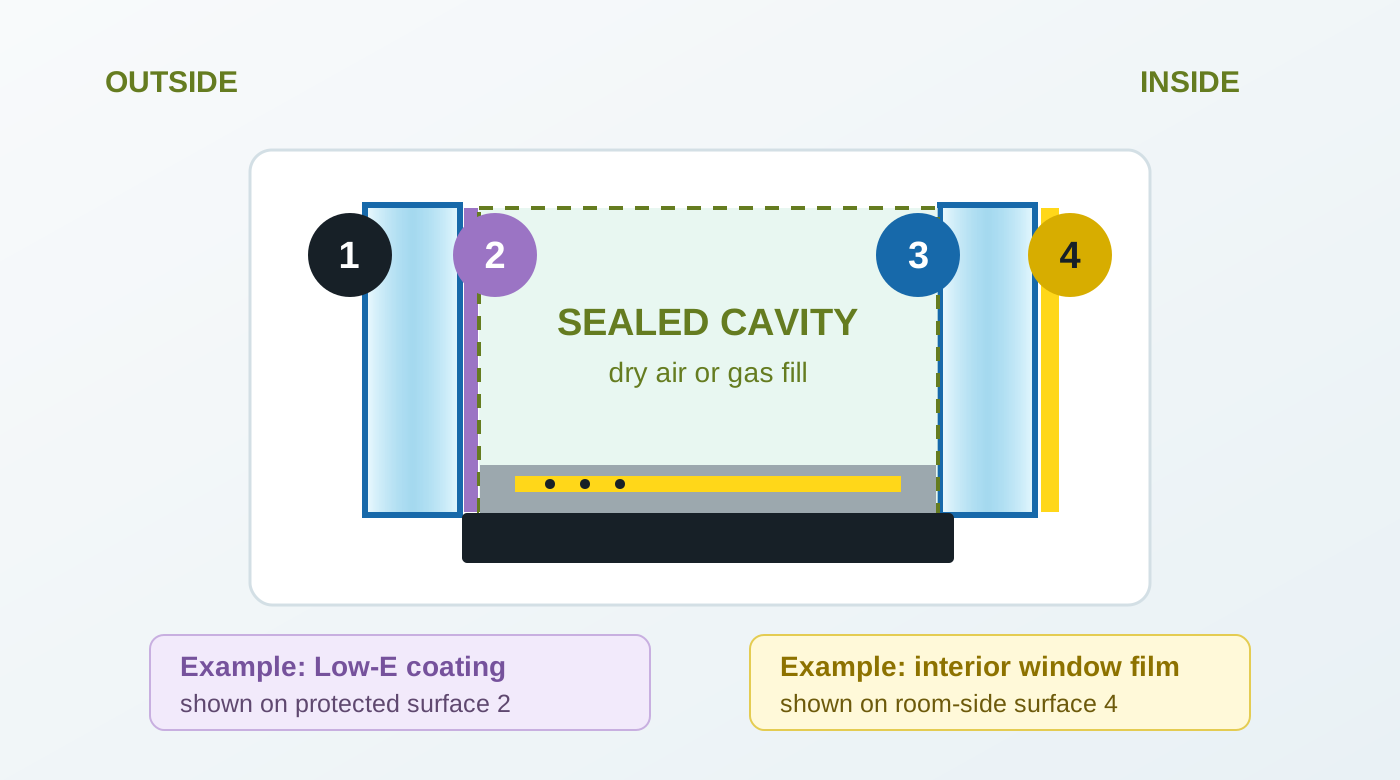
An IGU normally contains two or more panes separated by a spacer and hermetically sealed around the perimeter as one manufactured unit. Its cavity contains dry air or a gas such as argon, while desiccant helps control moisture.
A common double-pane IGU has four principal surfaces: the outdoor face, two protected cavity faces and the indoor face. Low-E coatings are often placed on a protected cavity surface, but the actual construction must be identified rather than assumed.
Why film on an IGU needs assessment
Applied film changes the solar-energy balance of the pane on which it is installed. On an IGU, excessive heat absorption may affect:
- the centre-to-edge temperature difference within the filmed pane;
- the temperature difference between the inner and outer panes;
- thermal stress at the glass edges;
- temperature and pressure within the sealed cavity;
- the edge seal and its long-term durability;
- an existing Low-E or solar-control coating; and
- the glazing manufacturer's warranty.
An IGU seal failure can allow moisture into the cavity, causing fogging or condensation between panes. Loss of gas fill and deterioration of insulating performance may follow. Film does not automatically cause seal failure, but an unsuitable film-and-IGU combination can increase thermal load and may affect warranty coverage.
Thermal-stress compatibility and insulated-glass seal risk are related, but passing one consideration does not automatically answer the other.
Other glass families
Laminated glass
Laminated glass uses multiple glass layers bonded by an interlayer that helps retain fragments after breakage. The layers may be annealed, heat-strengthened or toughened. The interlayer and any body tint change how heat is retained, so laminated glass should not simply be treated as toughened glass.
Toughened or tempered glass
Toughened glass is heat treated to create surface compression and has substantially greater mechanical and thermal-stress resistance than annealed glass of equal thickness. It is commonly marked near a corner and is designed to fragment into relatively small pieces if broken.
Its greater resistance gives an installer more options, but a toughened pane may still form part of a coated, laminated or insulated system whose other components affect compatibility and warranty.
Heat-strengthened glass
Heat-strengthened glass receives thermal processing but is cooled less rapidly than fully toughened glass. It normally offers around 1.5 to 2 times the mechanical and thermal-stress resistance of comparable annealed glass, while fully toughened glass may offer around 3 to 4 times the resistance. Heat-strengthened glass does not normally qualify as safety glass.
Wired and patterned glass
Wired glass contains embedded mesh, while patterned or rough-cast glass has a textured manufactured surface. Both may have comparatively limited thermal-stress tolerance. Texture can complicate adhesive contact, and wired glass combines materials with different thermal behaviour. Specialist advice is appropriate.
Low-E coated glass
Low-emissivity glass carries a thin coating intended to reduce radiative heat transfer. Low-E insulation performance is not the same as solar-film performance: it may not provide the glare, UV or solar-heat control a customer expects.
Compatibility depends on whether the unit is single glazed or an IGU, the numbered surface carrying the coating, hard-coat or soft-coat construction, the proposed film surface, combined absorption and the glass manufacturer's requirements.
Compatible film can often be installed on Low-E glazing, but there is no responsible universal answer without identifying the unit.
Conditions that increase risk
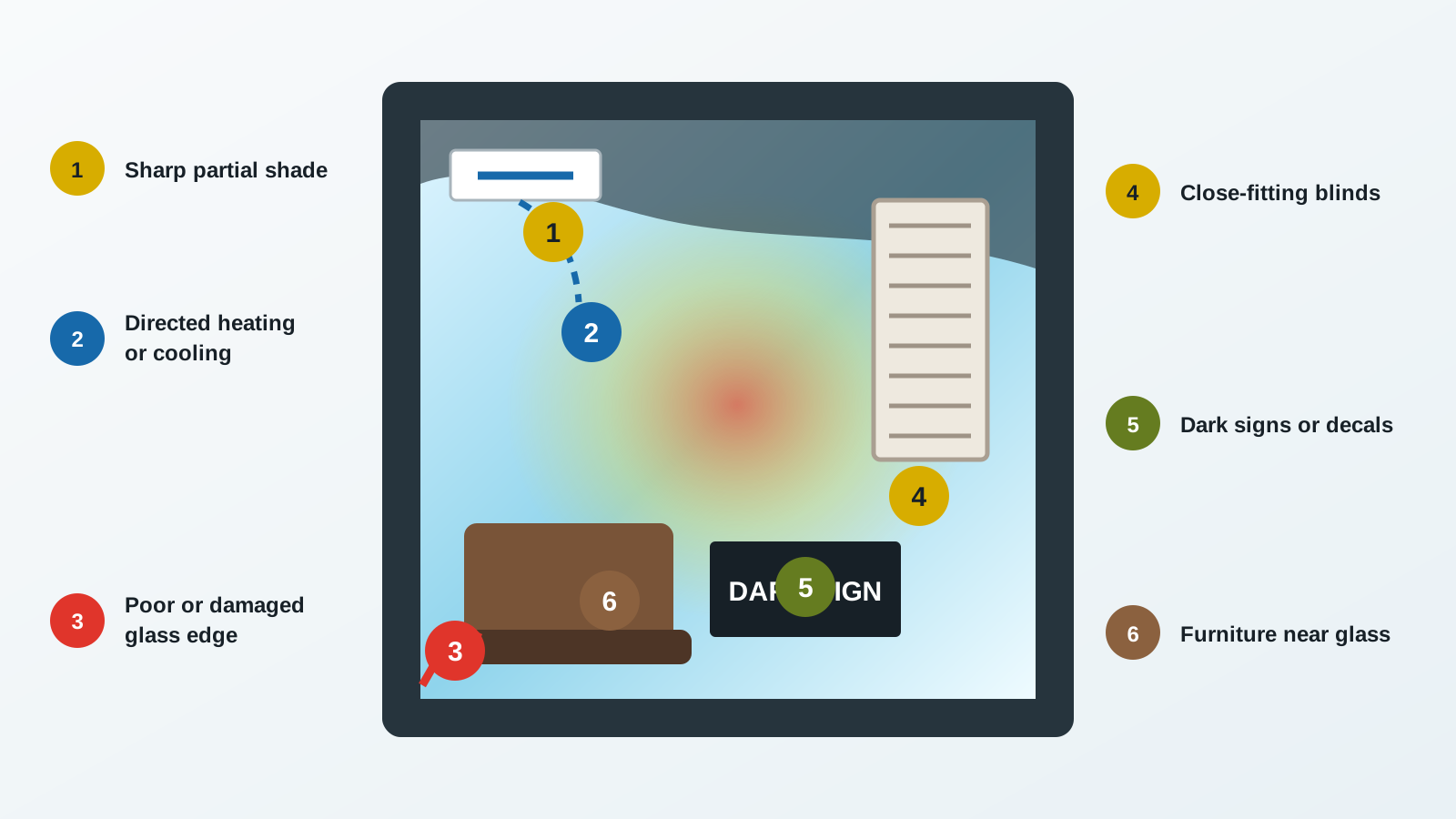
- deep or sharp partial shadows from eaves, fins, trees or nearby structures;
- close-fitting blinds or curtains that trap heat;
- furniture, boxes, displays, decals or dark signs close to the glass;
- heating or cooling outlets directed at one part of a pane;
- chipped, poorly cut or damaged edges;
- large panes, unusual shapes, holes or cut-outs;
- thick frames keeping the edge colder than the centre;
- sloped, horizontal or overhead glazing; and
- existing film, coatings or unknown treatments.
The shape of a shadow can matter as much as its size. A sharp, stationary boundary can produce a strong difference between adjacent areas of the pane.
Lower absorption reduces one factor
Solar absorption is a major consideration in thermal-stress assessment. A film that creates less absorption in the completed glazing system can reduce the added heat load.
However, “low absorption” is not a universal approval. The figure must apply to the actual film-and-glass combination, while glass strength, pane size, edge condition, shading, IGU construction and warranty still matter.
A highly reflective film may reject more energy before it is absorbed. Clear, dark, reflective and dual-reflective ceramic films can all have different solar properties. Specification and compatibility data—not a technology label alone—should decide the application.
Why professional installation is worth it
The visible finish is only one part of professional window tinting. An experienced architectural installer brings product knowledge and risk assessment to the job before removing a liner.
A professional should be able to:
- identify or investigate the glazing construction;
- inspect panes, edges, frames, seals and shading;
- consult current film-to-glass compatibility guidance;
- recommend internal or exterior installation appropriately;
- explain realistic heat, glare, privacy and appearance outcomes;
- use the manufacturer's approved installation system;
- document the installed product and warranty; and
- remain available if a warranty question arises.
A valid warranty is more than a marketing phrase. Customers should know who issued it, which film-and-glass combinations it covers, whether the original glazing warranty is affected and who handles a claim.
Why choose an ITN professional?
Independent Tinting Network dealers are not automatically admitted through an open directory registration. Team GTS hand-selects experienced independent professionals it regards as some of the best in the business.
The network connects consumers with established local operators who understand professional film products, glass assessment and installation in Australian conditions. That means direct accountability, practical knowledge, valid product channels and support from a business whose local reputation depends on the result.
Questions to ask before approving a quote
- What glass and glazing system do I have?
- Is it single glazing, separate secondary glazing or a sealed IGU?
- Does it carry a Low-E or solar-control coating?
- What exact film manufacturer, series and shade are proposed?
- Has that film been checked against current compatibility guidance?
- Could the application affect the glass or IGU warranty?
- Would an exterior product be more appropriate?
- Who supplies the product and workmanship warranties?
- Will the installed film be recorded on the invoice or warranty?
Frequently asked questions
Can window film be installed on double glazing?
Often, yes, but “double glazing” is not enough information to approve a film. The installer must identify whether the panes are separate or form a sealed IGU, determine the glass and coating types, and check current compatibility guidance.
Can window film cause an IGU seal to fail?
Film changes the solar-energy balance and temperature of the glazing. An unsuitable combination may increase thermal loading or affect warranty coverage. Correct selection considers the complete unit.
Is toughened glass safe for every film?
Toughened glass has greater thermal-stress resistance, but it may form part of a laminated, coated or insulated system. Product compatibility and warranty requirements still apply.
Is ceramic film always safer for glass?
No. Ceramic describes technology within a film, not the completed system's absorption. Ceramic products can be clear, dark, reflective or dual reflective and can have different solar properties.
How can an installer identify glass?
Installers may use safety-glass stamps, visual and reflection tests, coating detectors, thickness tools, building documents and manufacturer information. Some glazing requires further investigation.