

Before accepting any tinting package, ask who will perform the installation, exactly which product will be used and who will help if the result needs attention later.
The person behind the product matters
Window film is easy to describe as a commodity: choose a shade, agree on a price and book the job. In practice, the finished result depends on a chain of professional decisions.
The installer may need to assess the vehicle glass, an existing coating, a large residential pane, insulated glazing, partial shading or the way a room is used. They must then select a suitable product, prepare the glass, install it cleanly and explain what the customer should expect while the film cures.
An established specialist performs this work every day. Their reputation is attached to the recommendation as well as the installation.
Understand what you are buying
A tinting service can be sold directly by the business performing the work or as one part of a larger vehicle or property package. Neither arrangement alone proves quality, but a direct specialist relationship usually makes important details easier to establish.
| What to establish | Direct specialist service | Packaged or arranged service |
|---|---|---|
| Who performs the work? | The installation business is normally known from the beginning. | The work may be performed internally or subcontracted. Ask for the installer's details. |
| What product is supplied? | The manufacturer, series and shade can be written into the quote. | Products may be described broadly unless the customer requests exact details. |
| Who gives the advice? | The customer can speak with someone who works with film and glass regularly. | Advice may pass through a salesperson or another intermediary. |
| Who supports the result? | The installer can inspect the work and explain the product directly. | A concern may involve the package seller, installer and product supplier. |
| How is the price presented? | The tinting work and product can be quoted clearly. | The tint may form part of a combined aftermarket package. |
The goal is transparency, not a particular sales channel. A customer should be able to identify the product, installer, expected result and support path before agreeing to the work.
Why specialist experience matters for vehicle tinting
Modern vehicle glass is not simply a set of flat panes. Installers work around shaped rear windows, demister lines, antennas, cameras, sensors, trims and delicate interior surfaces. The film also needs to suit the vehicle, applicable tinting limits and the customer's expectations for appearance, heat, glare and privacy.
A professional installer should be able to explain:
- the exact manufacturer, series and shade being installed;
- why that film is suitable for the vehicle and requested result;
- which glass areas can legally and practically be filmed;
- how the film should look from inside and outside;
- the expected curing process and normal temporary moisture effects; and
- the product and workmanship support available afterward.
It identifies a broad technology family, not the film's exact shade, solar performance, construction or warranty. Our ceramic window-film guide explains the measurements worth comparing.
Homes and offices require real glass knowledge
Residential and commercial tinting is a technical service as well as a visual improvement. The installer must consider what the customer wants to solve—heat, glare, fading, privacy, appearance or several problems together—and then determine what the existing glass can safely accept.
Single glazing, laminated glass, Low-E coatings and insulated glass units do not all respond the same way. Orientation, pane size, edge condition, framing, shadows and nearby furnishings can also affect product selection.
A film with impressive performance figures may still be wrong for a particular window. Read understanding window glass and film compatibility for a deeper explanation of these risks.
What professional service should include
The most reliable installations follow a process. The scale changes between a car, a living room and a commercial facade, but the professional responsibilities remain recognisable.
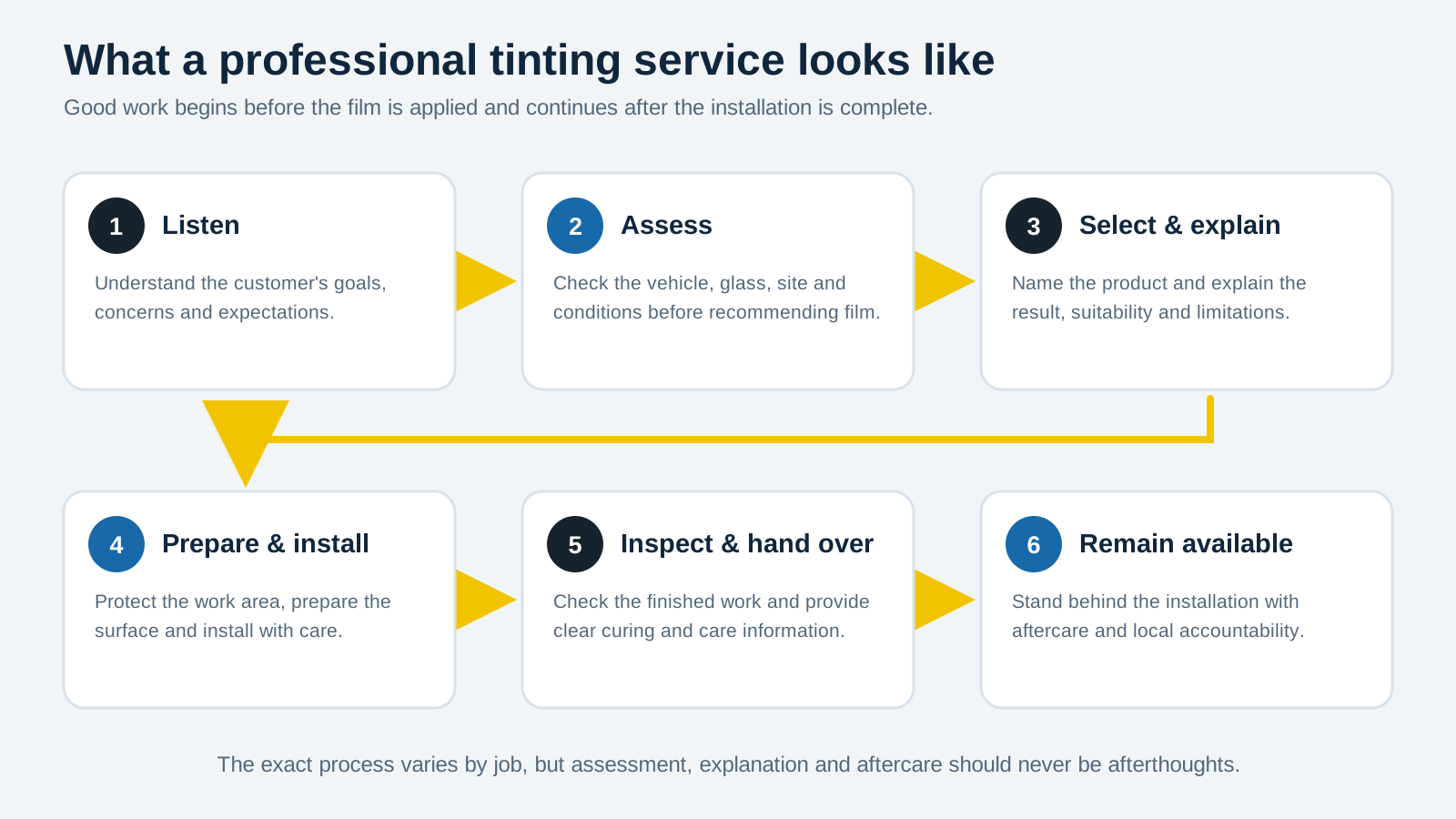
1. Listen
The first task is understanding the problem, the required appearance, the budget and how the vehicle or room is used.
2. Assess
The installer identifies the relevant glass, exposure, condition, access and installation risks rather than selecting from appearance alone.
3. Select and explain
A suitable film is recommended with realistic information about its benefits, limits, appearance and warranty.
4. Prepare and install
Cleanliness, contamination control, safe access, vehicle or property protection and careful finishing all influence the result.
5. Inspect and hand over
The completed work should be checked and the customer given suitable care and curing information.
6. Remain available
If the customer later has a question, the business that supplied the service should be identifiable and accessible.
Warranty, consumer rights and aftercare
A useful warranty identifies the product and the businesses responsible for supporting it. It should explain the covered period, conditions and claim process without relying on vague promises.
In Australia, voluntary product and workmanship warranties operate in addition to consumer guarantees. Where Australian Consumer Law applies, services must be supplied with due care and skill, be fit for a stated purpose and be supplied within a reasonable time when no time has been agreed.
A long-standing local installer gives the customer a direct place to begin if the work needs to be inspected. That relationship cannot guarantee that a concern will never occur, but it makes communication, diagnosis and appropriate support far more practical.
Why a local reputation is valuable
Independent tinting businesses are often built over many years through recommendations, repeat customers and relationships with local builders, vehicle businesses, property managers and families.
The person who gives the advice may also measure the windows, prepare the quote, install the film or inspect the completed job. Even when a business has a larger team, its name remains visible on the workshop, vehicle and invoice.
This creates genuine accountability. Helpful service earns referrals; poor service travels through the same community just as quickly.
Why Team GTS supports independents
Glass Tinting Supplies Pty Ltd and GTS Films Pty Ltd were built from direct industry experience. Together, the two businesses form Team GTS. Michael Miller spent years installing window film and servicing vehicle dealerships before seeing how vulnerable independent installers could become when larger organisations controlled both product supply and the allocation of work.
That experience helped drive Michael to build a supply business designed to support independent professionals rather than compete against them. For the past 15 years, Team GTS has supplied products, answered technical questions, shared practical knowledge and created opportunities for the businesses it supports.
Michael and Alex Koulouris bring approximately 80 years of combined window-film industry experience. Alex's journey reaches back to the early days when tint could be a liquid flowed onto glass. The technology has changed enormously, but the value of experience, honesty and helping another installer solve a problem has not.
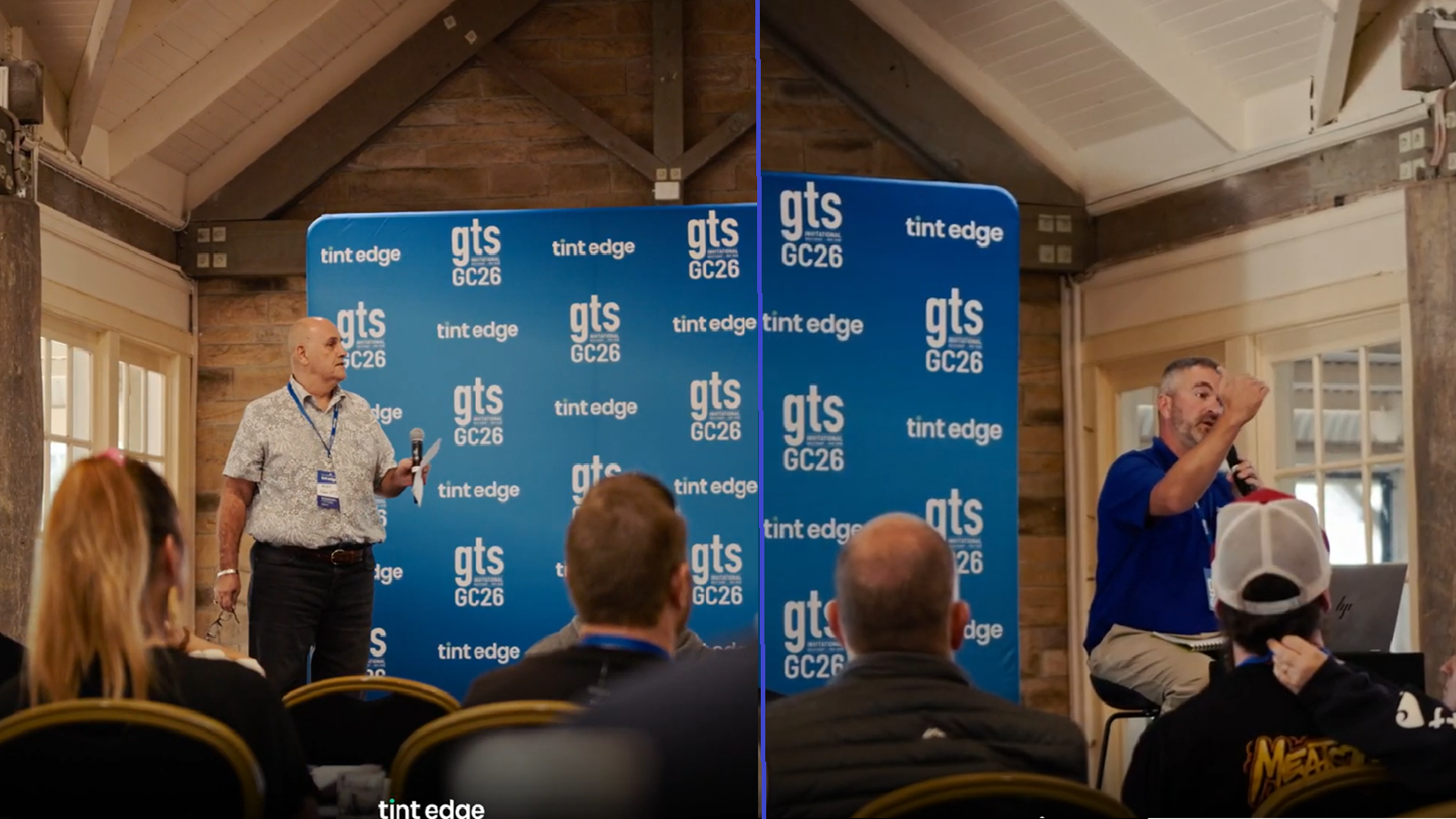
GTS holds industry conferences, assists businesses with trade and product knowledge, and makes practical help available when an installer asks for it. Independent Tinting Network is a continuation of that purpose: investing in visibility and genuine local enquiries for established independent businesses.
What an Independent Tinting Network listing means
Independent Tinting Network is not intended to be an open directory filled with anonymous paid listings. Its professionals are selected through established GTS industry relationships and ongoing trade activity.
The network is designed to help consumers find independent businesses with practical experience while giving those professionals the tools to respond. An enquiry can move directly into the dealer's GTSpro2 workflow, where it can be reviewed and developed into an appointment, quote, invoice or warranty record.
The technology supports the relationship; it does not replace it. The value still comes from a knowledgeable local person responding properly to the customer.
Questions to ask before booking
A professional should welcome sensible questions. These seven establish most of what a customer needs to know.
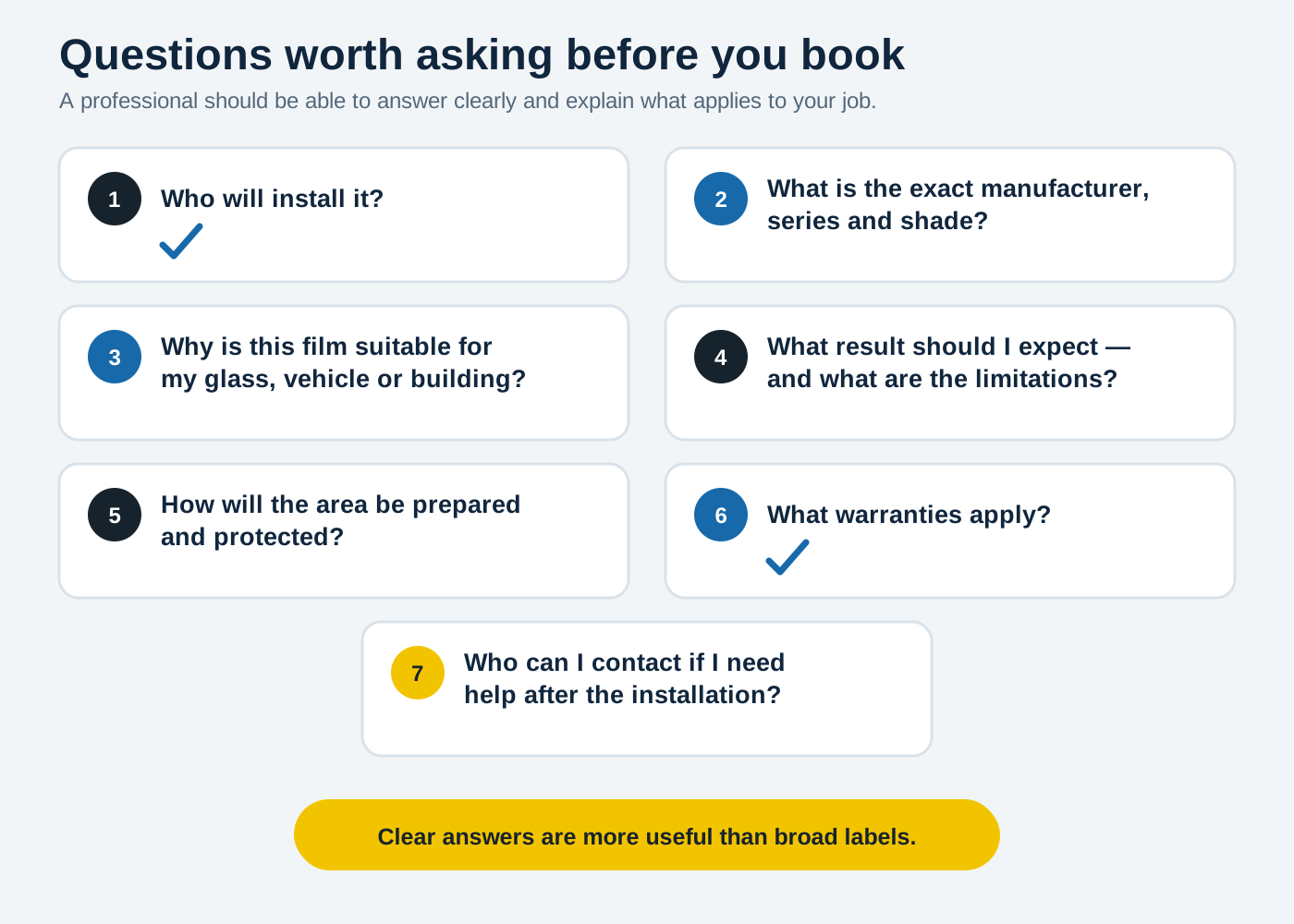
- Who will perform the installation?
- What is the exact manufacturer, series and shade?
- Why is that film suitable for my vehicle, glass or building?
- What result should I realistically expect?
- What preparation and protection are included?
- What product and workmanship warranties will I receive?
- Who do I contact if I need help afterward?
Frequently asked questions
Why choose a specialist tinting business?
A specialist can connect the customer's required result with the exact product, glass assessment, installation method and aftercare needed to deliver it.
Is tinting arranged through a dealership always installed there?
No. Arrangements vary and the work may be performed internally or subcontracted. Ask who will install it and request the exact film details in writing.
Is the most expensive tinting package necessarily the best?
No. Price alone does not identify the product, installer or result. Compare the exact film, suitability, installation, written coverage and aftercare.
Does a lifetime warranty guarantee the best film?
No. Read what is covered, who issued the warranty, any conditions and how a claim is handled. Consumer guarantees may also apply independently of a voluntary warranty.
Are all Independent Tinting Network businesses franchises?
No. They are independent businesses operating under their own names. The network helps consumers discover them and send enquiries directly to them.