
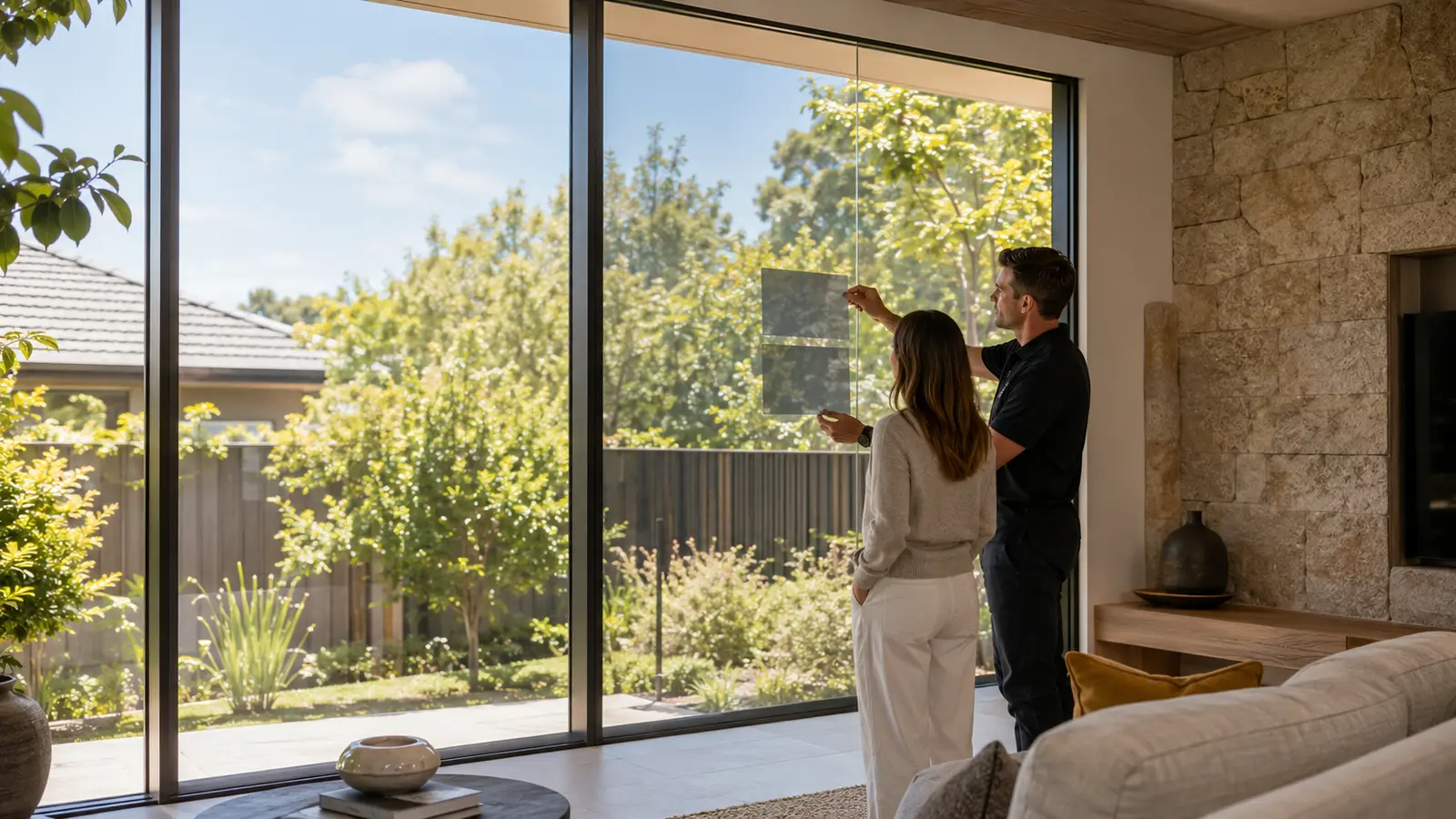
The word describes a broad technology family. It does not tell you the film's visible light, total solar rejection, absorption, reflectivity, privacy, colour or compatibility with your glass.
What is ceramic window film?
Ceramic window film uses very small inorganic particles or coatings to influence selected parts of solar energy. Different manufacturers use different materials, coating methods and constructions, and some products combine ceramic technology with carbon, reflective layers or other components.
That is why two products both described as ceramic can look and perform quite differently. One may be nearly clear, another may have a deep neutral shade, while another uses a reflective exterior appearance with a low-reflection ceramic layer facing the room.
The useful question is not simply, “Is it ceramic?” It is, “What does this complete film-and-glass system do?”
Ceramic film and the solar spectrum
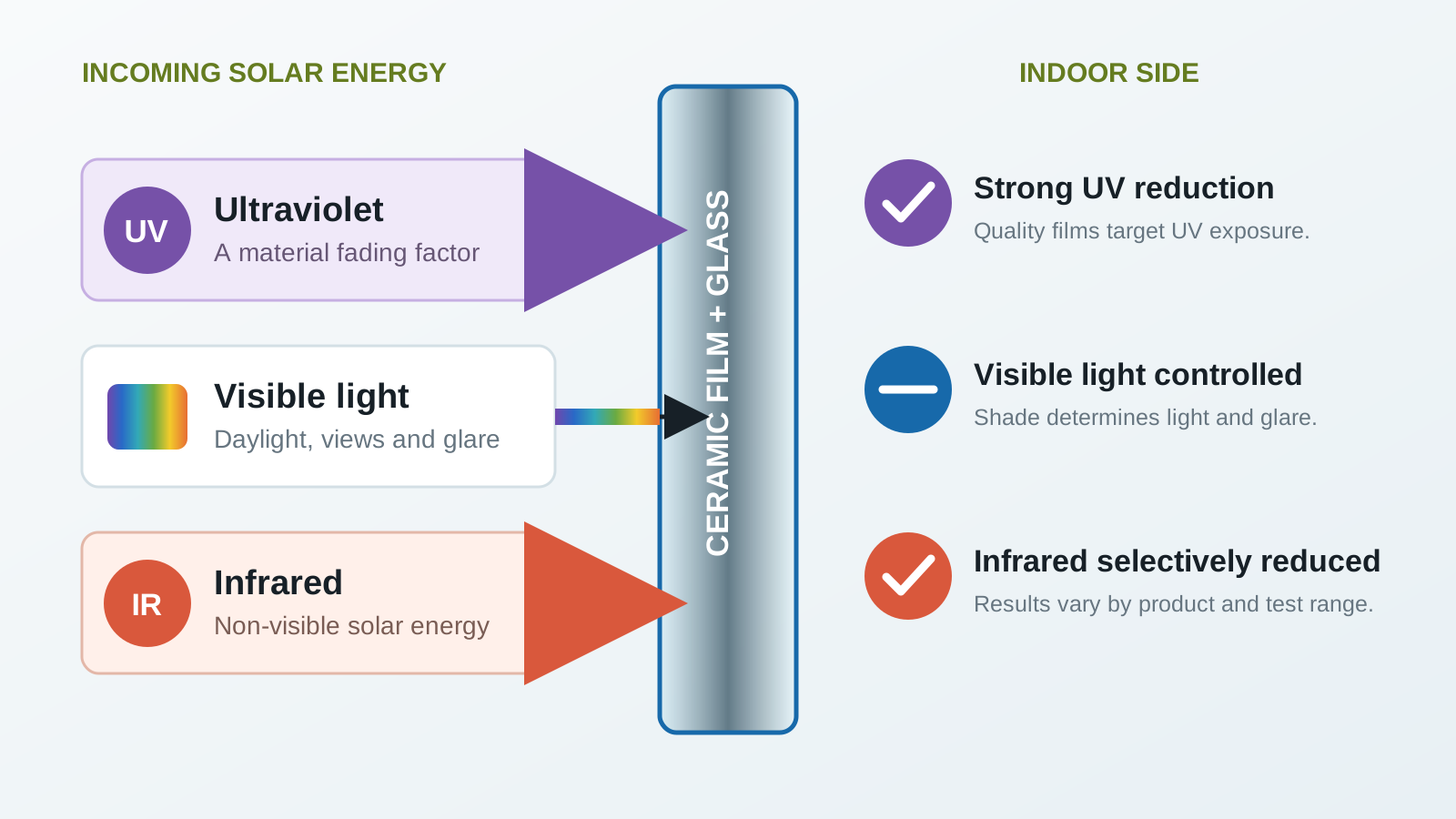
Solar energy reaching glass includes ultraviolet, visible and infrared wavelengths. A modern film can treat those regions differently.
- Ultraviolet: an important contributor to material degradation and a concern for skin exposure.
- Visible light: determines how light or dark the glazing appears and strongly affects daylight, glare and views.
- Infrared: forms a substantial non-visible portion of solar energy and is commonly targeted by ceramic coatings.
Selective ceramic products can reduce non-visible energy while allowing considerable visible light through. This makes clear and light ceramic films useful where owners want solar improvement with minimal change to the building's appearance.
The measurements worth understanding
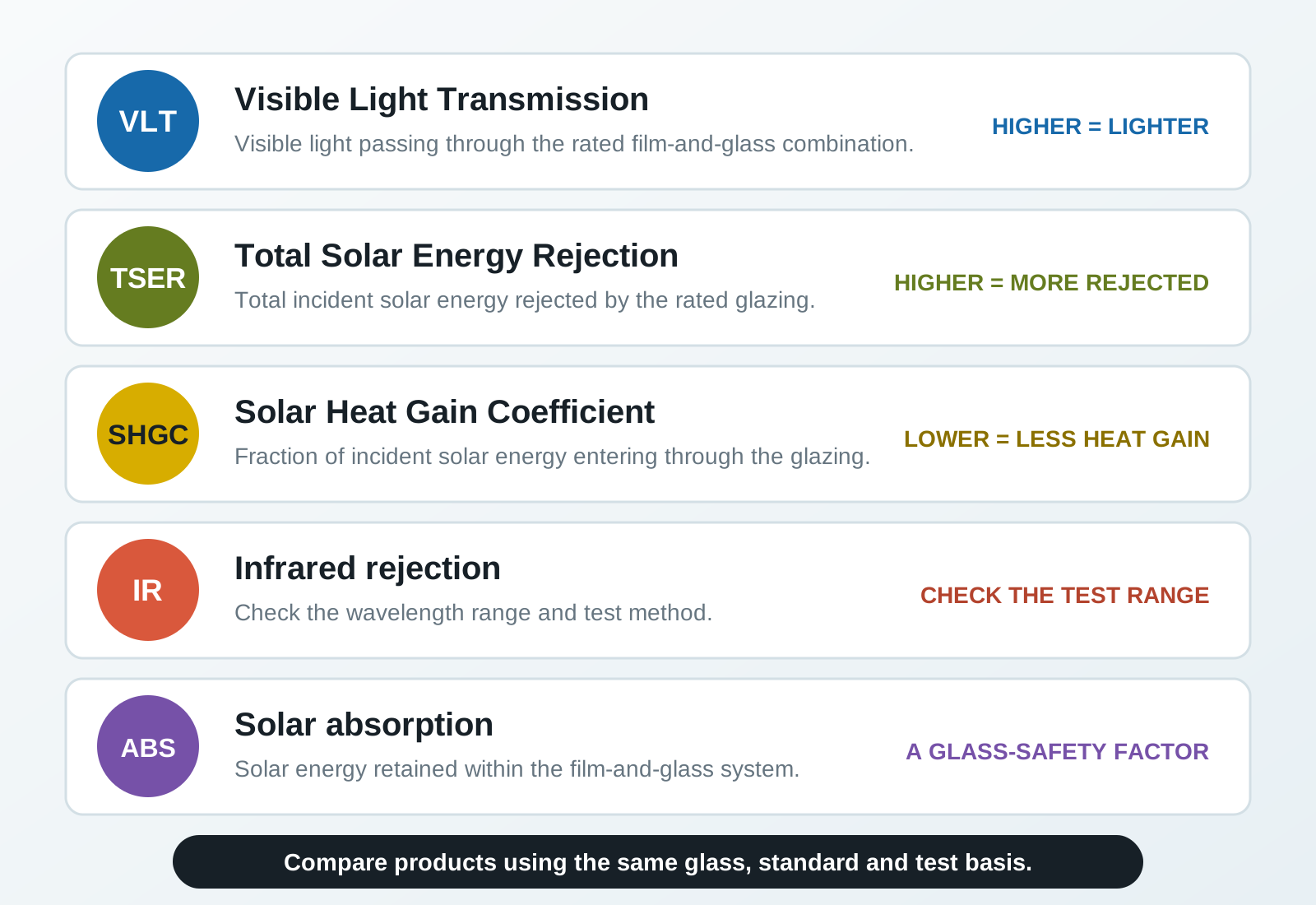
Visible Light Transmission (VLT)
VLT is the percentage of visible light passing through the rated film-and-glass combination. A higher VLT looks lighter and preserves more daylight. A lower VLT looks darker and generally gives stronger daytime glare and privacy control.
VLT is not a heat-rejection figure. Two films with similar visible light can have different solar performance.
Total Solar Energy Rejection (TSER)
TSER describes the proportion of total incident solar energy rejected by the rated glazing system. It accounts for energy reflected directly and the inward-flowing portion of absorbed energy.
For products measured under equivalent standards and on equivalent glass, TSER is one of the most useful headline figures for overall solar performance.
Solar Heat Gain Coefficient (SHGC)
SHGC describes the fraction of incident solar energy that enters through the glazing. Lower means less solar heat gain. The window-film industry often expresses the same relationship in the more consumer-friendly direction:
The published number should identify the glass used in the calculation. Film-only marketing figures do not always describe the result on your actual window.
Infrared rejection
Infrared figures require context. One supplier may report performance across a broad infrared range while another reports a narrow wavelength or a peak value. Large-looking IR numbers are not automatically comparable.
Use TSER or SHGC first for overall solar performance. If IR rejection is important, check the test range and whether competing products were measured the same way.
Solar absorption
Absorption is the portion of solar energy retained in the film-and-glass system. Absorbed energy increases glass temperature and must be considered during film-to-glass assessment.
A film can have excellent solar performance and still be unsuitable for a particular pane, coating or insulated glass unit. Read our companion guide, Understanding window glass and window film compatibility, for the glazing side of the decision.
Clear, natural, dark or reflective?
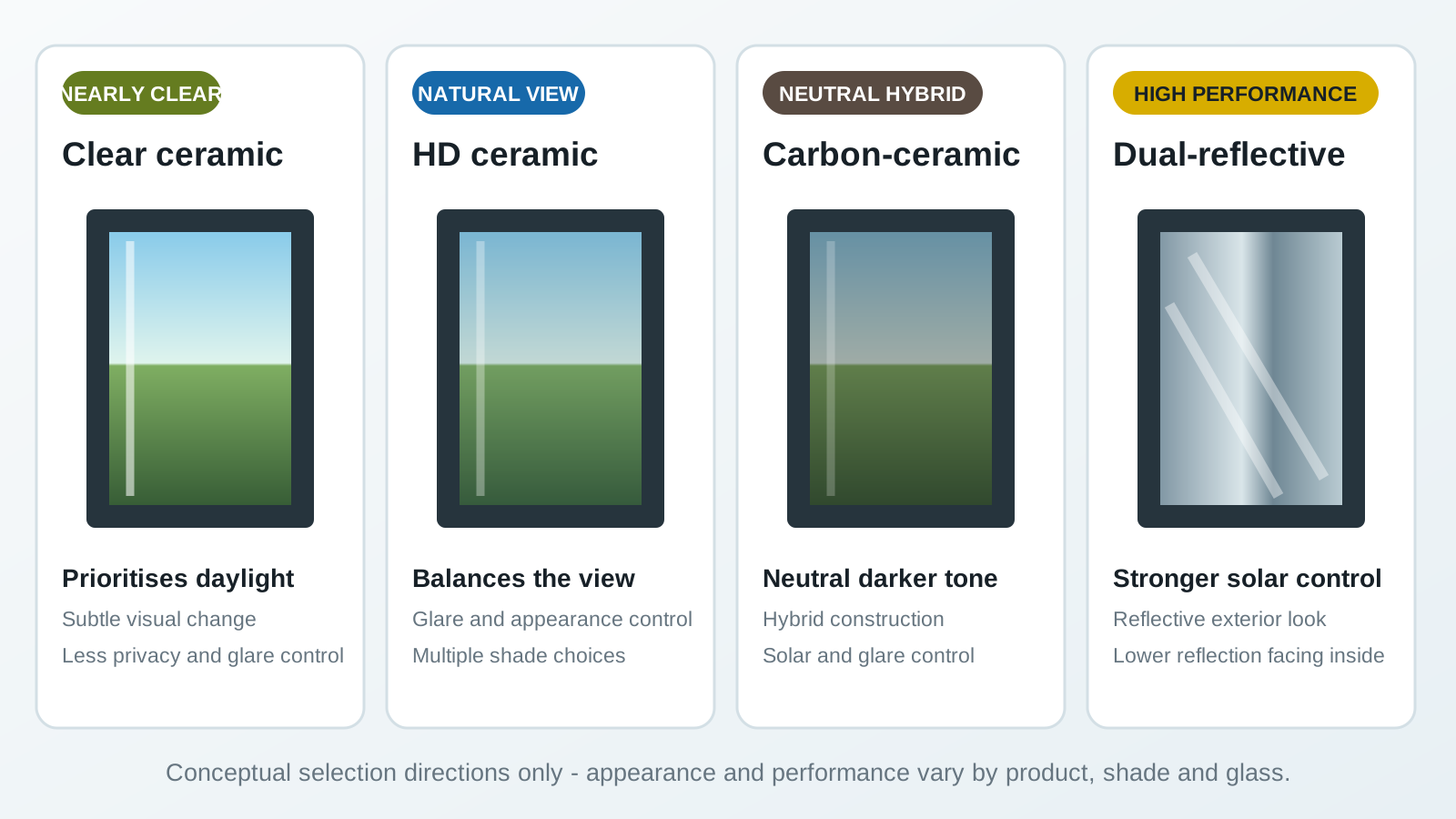
Ceramic technology can support several design directions. The right one depends on the problem being solved.
| Film direction | Typical priorities | Important trade-offs |
|---|---|---|
| Clear or nearly clear ceramic | Preserve daylight and exterior appearance while improving UV and solar control. | Limited glare reduction and little daytime privacy compared with darker films. |
| Natural-view ceramic | Balanced heat and glare reduction with high-definition views and controlled reflectivity. | The selected shade still changes daylight and exterior appearance. |
| Carbon-ceramic hybrid | Durable neutral appearance, solar control and lower outward reflectivity. | Performance and absorption depend on the complete hybrid construction. |
| Dual-reflective ceramic | Strong solar and daytime privacy performance with reduced interior reflection. | More visible exterior reflectivity; privacy reverses when interior lighting becomes brighter. |
These categories overlap. Product data and an actual film sample on the customer's glass are more useful than assuming a result from the category name.
Examples across the GTS architectural range
The current Glass Tinting Supplies residential and commercial range demonstrates how broad the word ceramic has become:
- Pristine Clear Nano Ceramic: very high visible-light options intended to create an almost invisible solar and UV-control layer.
- NatureVue High Definition Ceramic: a range of shades designed around selective solar filtering, optical clarity and natural views.
- Matrix Nano Carbon Ceramic: a fused carbon-and-ceramic construction intended to combine durable neutral appearance with solar performance.
- Synergy Dual Reflective Ceramic: reflective solar protection on the exterior-facing side combined with a lower-reflection ceramic interior layer to improve internal views.
These are not interchangeable versions of one product. They occupy different positions between natural light, glare control, privacy, exterior reflectivity, total solar performance and glass compatibility.
What ceramic film can and cannot do for privacy
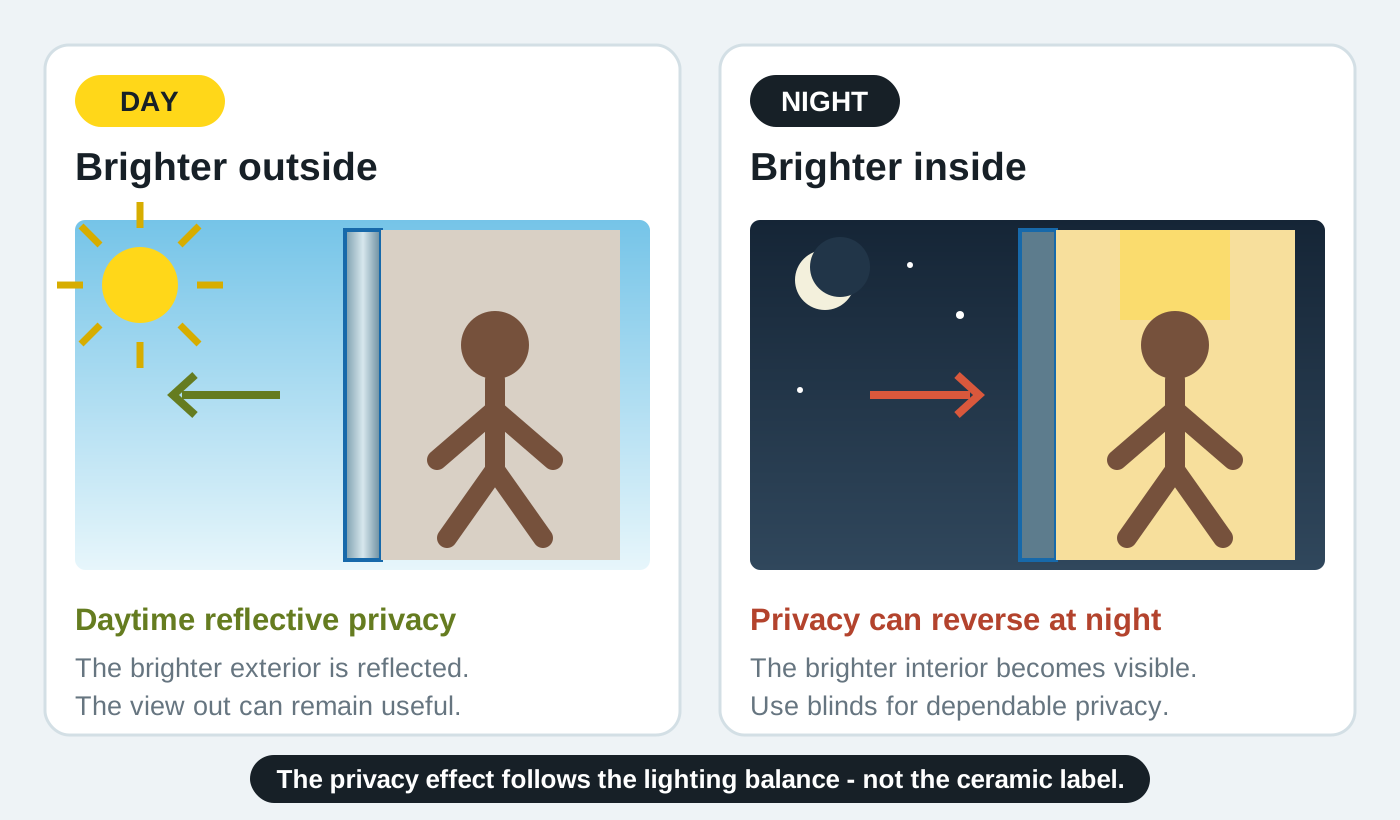
Daytime privacy depends primarily on light balance and visible reflectivity, not the ceramic label. When it is brighter outside than inside, a darker or reflective film can make it difficult to see into a room while maintaining a view out.
At night the lighting balance reverses. If the interior is illuminated and outside is dark, the reflective effect can reverse as well. Curtains, blinds, switchable treatments or purpose-designed opaque and translucent films are needed where dependable night privacy is required.
No solar window film can guarantee one-way visibility under every lighting condition.
Heat, glare and comfort are separate outcomes
A customer may say a room is “too hot” when the underlying issue is direct solar radiation, bright glare, hot glass, poor insulation, air leakage or several factors together.
Ceramic solar-control film can materially improve comfort by reducing solar heat and glare, but the best product depends on how the space is used:
- a lounge with a view may favour high visible light and controlled interior reflection;
- a west-facing office may need stronger glare and solar control;
- a retail frontage may need daylight and colour-neutral merchandise views;
- a large commercial facade may favour dual-reflective performance;
- existing Low-E or insulated glazing may limit the compatible choices; and
- a heritage or appearance-sensitive facade may require minimal visual change.
UV protection and fading
Quality solar films commonly provide strong ultraviolet reduction, which helps protect people and slows deterioration of furnishings, flooring, artwork and merchandise.
UV is not the only cause of fading. Visible light, solar heat, humidity, material chemistry and dye stability also contribute. Film can substantially reduce exposure, but no film can promise to stop all fading.
Will ceramic film affect wireless signals?
Many ceramic films are selected where customers want to avoid the signal effects associated with some highly metallised constructions. However, “ceramic” does not prove that a complete film construction contains no conductive or reflective components.
Buildings can also contain existing coated glass, foil insulation, steel framing and other materials that influence reception. If signal compatibility is critical, confirm the exact film construction rather than relying on the category name.
How a professional selects ceramic film
A useful consultation starts with the window and the room—not with the darkest sample or highest marketing number. An installer should consider:
- the glass type, coatings and glazing construction;
- orientation, shading and the time the problem occurs;
- the balance between heat, glare, daylight and privacy;
- desired interior and exterior appearance;
- film absorption and film-to-glass compatibility;
- internal versus exterior installation;
- manufacturer and glazing warranty requirements; and
- samples viewed on the customer's actual glass.
Independent Tinting Network professionals are hand-selected independent businesses with practical product and installation experience. They can translate the data into a recommendation that suits the glass, the building and the people using the space.
Questions to ask when comparing quotes
- What is the exact manufacturer, series and shade?
- What glass was used for the published performance figures?
- What are the VLT, TSER or SHGC and solar absorption?
- If IR rejection is quoted, what wavelength range was measured?
- How will the product look from inside and outside?
- What privacy should I realistically expect by day and night?
- Has the film been checked for my glass and glazing system?
- What product and workmanship warranties apply?
Frequently asked questions
Is ceramic window film always better?
No. Ceramic is a technology family, not a universal performance standard. The correct film depends on the required result and the existing glass.
Can clear ceramic film reject heat?
Yes. Spectrally selective films can reduce non-visible solar energy while retaining high visible light. They normally provide less glare and privacy control than darker options.
Does the darkest ceramic film reject the most heat?
Not automatically. Darkness describes visible-light transmission. Overall solar performance depends on the complete product's transmission, reflection and absorption.
Is an infrared rejection figure enough to compare products?
No. Check the wavelength range and test method. TSER or SHGC measured under equivalent conditions gives a better overall solar comparison.
Does ceramic film provide night privacy?
Not reliably. When the interior is brighter than outside, visibility can reverse. Use blinds, curtains or a purpose-designed privacy treatment where dependable night privacy is required.